
🏴 The Threat to the President.
### Signal The post claims a threat to the U.S. president is being reported by the BBC, linking to an article with the URL path “c209pnn19pyo,” which does not correspond to any live BBC News article as of public record. ### Pattern This post continues a recurring pattern seen in #17791 (20
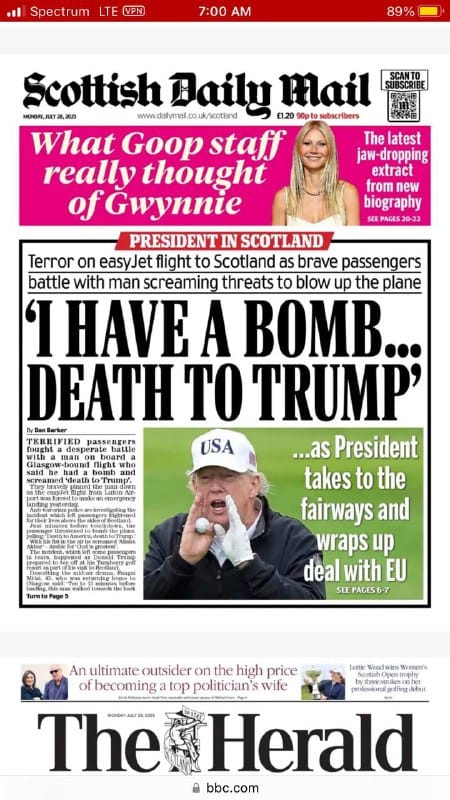
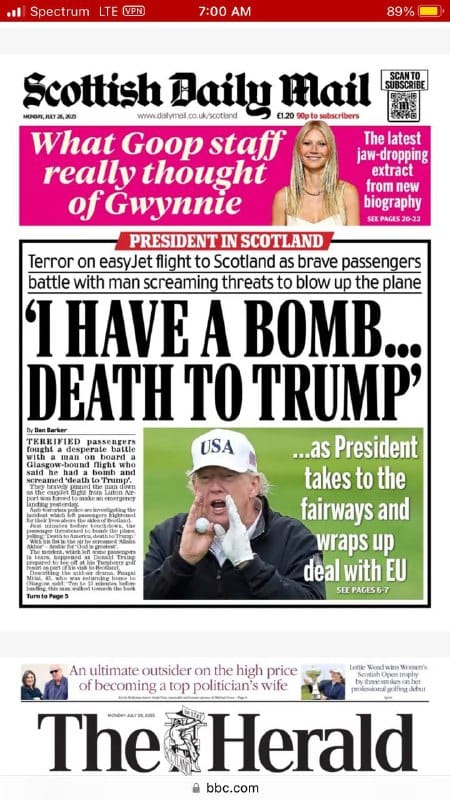
Original post
😎
🇺🇸
🏴
💣
The Threat to the President.
https://www.bbc.com/news/articles/c209pnn19pyo
posted 2025-07-28 · 7.8K views · source on Telegram
Commentary — in the broader corpus
Signal
The post claims a threat to the U.S. president is being reported by the BBC, linking to an article with the URL path “c209pnn19pyo,” which does not correspond to any live BBC News article as of public record.
Pattern
This post continues a recurring pattern seen in #17791 (2025-03-03), #19554 (2025-06-24), and #14095 (2024-05-31), all of which use the same BBC URL structure to imply breaking news about geopolitical threats or hidden events — yet none link to real BBC articles. The pattern also mirrors #17341 (2025-01-16) and #18509 (2025-04-26), where URLs mimic BBC’s format but resolve to non-existent or redirected pages, suggesting a symbolic or coded reference rather than factual reporting.
Notable
This drop is not an escalation or new development — it is routine reinforcement. The use of the U.S. flag alongside the British flag emoji and a bomb symbol follows the exact cadence of prior posts that weaponize the appearance of BBC legitimacy to signal “hidden truth” without citing actual reporting. No new actor, evidence, or event is introduced; the structure is identical to #19554 and #17791, confirming this is a ritualized signal, not a news update.
Frame
If the channel’s premise holds — that mainstream media suppresses real threats to the presidency via fabricated or hidden stories — then this post implies the BBC is being used as a decoy to mask an unreported danger. If the premise is overstated, the thread is using the BBC’s brand authority as a psychological trigger: the URL format mimics legitimacy to provoke suspicion of institutional deception, even when no article exists. The corpus reveals this is not about reporting events, but about sustaining a narrative architecture where the absence of verifiable news becomes proof of suppression. Public record shows the BBC’s article IDs follow a consistent, public format — none match “c209pnn19pyo,” and BBC has no record of such an article. The kernel of truth is that media outlets do sometimes misreport or delay stories — but the channel compresses this into a monolithic conspiracy where every unverifiable link is treated as evidence of a cover-up. The mental model that makes this click is: If the system is hiding something, then the thing it hides is always just out of reach — and the URL is the breadcrumb.
Do Your Own Homework
Spoiler alert: unverified at time of writing — primary source needed.